

Bone Strength Supplements, Health Guides, Reviews, Supplement
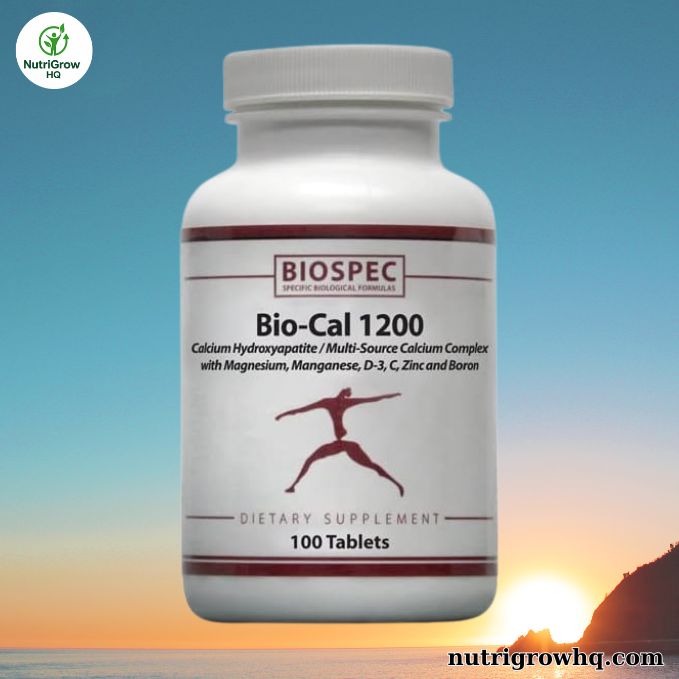
Bio-Cal 1200 Review | Can It Really Help Bone & Joint Health for 40+?
Oct
If you’re over 40 and have suffered joint pain, bone thinning, or worry about osteoporosis, you’re not alone. Many people in midlife feel increasingly fragile — every creak in a knee or twinge in a spine raises fears: “Am I losing bone mass? Will I fracture someday?” Conventional calcium pills often leave users frustrated — poor absorption, digestive discomfort, or uncertainty whether the calcium is going to bone or building unwanted deposits elsewhere in the body.
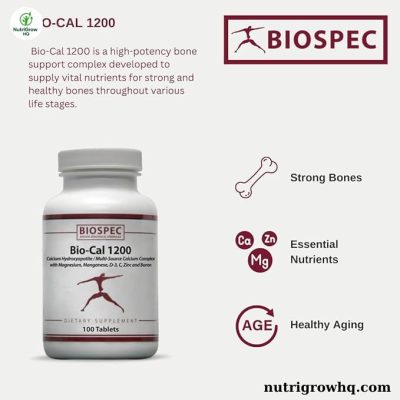
What if there were a bone-support formula designed specifically for aging bones — one that not only offers calcium but also the cofactors your body needs to use it effectively? Enter Bio-Cal 1200 – Superior Bone Support Complex. This is a high-potency bone health supplement promising to supply essential nutrients often lost with age, in forms that favor absorption and proper utilization.
In this review, I’ll dig deep into what Bio-Cal 1200 is, who it’s best for, how it works, and whether it’s worth your money — so you can decide confidently whether it might support your bone and joint health journey.
What Is Bio-Cal 1200?
Bio-Cal 1200 is a dietary supplement marketed as a comprehensive “bone support complex.” It is produced by Biospec Nutritionals (or sometimes labeled under BioSpec brand). The product is sold in tablet form, typically in 100- or 250-count bottles.
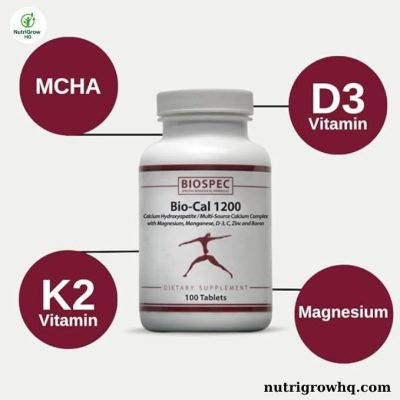
According to the manufacturer, Bio-Cal 1200 aims to provide a blend of calcium, magnesium, vitamins D and K, trace minerals (zinc, manganese, boron), microcrystalline hydroxyapatite (MCHA), and support compounds like betaine HCl. It’s promoted as a more advanced alternative to typical calcium-only supplements because it addresses not only mineral supply but also the “machinery” your bones and joints need (collagen formation, proper calcium transport, mineral balance).
Some key claimed features:
Multi-source calcium complex, including MCHA (microcrystalline hydroxyapatite), which is a bone-derived form of calcium that reportedly includes both mineral and organic bone matrix components.
Vitamin D3 (cholecalciferol), to support calcium absorption and skeletal / immune health.
Vitamin K1 and K2 (MK-7) to help guide calcium into bone and prevent inappropriate deposition in blood vessels.
Magnesium, zinc, manganese, boron and vitamin C as cofactors for bone metabolism, collagen, and structural support.
Betaine HCl to support stomach acid (which may enhance mineral absorption).
On the official Biospec product page, its purpose is described as supporting bone density, structural integrity, cartilage health, and overall wellness. The brand promotes that the formula uses higher potencies of bone-support nutrients than many competing formulas.
It’s typically available online (Amazon, health stores, specialty supplement sites). The Amazon listing you shared shows its availability via retailer channels.

Who Should Use It?
Bio-Cal 1200 is primarily marketed to:
Adults over 40 who are entering the age when bone loss accelerates (menopause in women, gradual bone density decline in men).
People with bone or joint issues — early-stage osteopenia, osteoporosis, bone fragility, or cartilage wear.
Those seeking more than just calcium — i.e. a “complete” bone support blend rather than single-nutrient supplements.
Individuals who may have difficulty absorbing minerals and need cofactor support (vitamin D, K2, magnesium) to maximize utilization.
Health-conscious users who prefer formulas that bundle multiple trace nutrients rather than assembling them individually.
However, it may not be ideal for:
Young healthy adults under 30 whose bone-building demands may be different (and who might need different nutrient ratios).
Those with contraindications (e.g. hypercalcemia, kidney stones, certain heart or vascular conditions) — consultation with a physician is essential.
People already on high-dose calcium or bone drugs — interactions or overdosing risk may exist.
People who cannot tolerate tablets or have swallowing issues (though the manufacturer claims “reduced tablet size” for easier ingestion).
In short: if you’re in a midlife stage where bone loss is a real concern and you want a full-spectrum supplement rather than piecing together nutrients yourself, this is in your target zone.
Key Ingredients & How They Work
Below are the major ingredients (with amounts) and how they may contribute to bone/joint support. Always note: dietary supplements may support but do not guarantee healing or reversal of disease.
| Ingredient | Amount per suggested dose | Role / Mechanism |
| Calcium (multi-source + MCHA) | 1,200 mg elemental (from multiple calcium salts + microcrystalline hydroxyapatite | The foundational mineral for bone — provides raw material for bone mineralization. MCHA (bone-derived) is thought to include both the mineral matrix and trace organic bone proteins, which may offer better compatibility for bone remodeling. |
| Vitamin D3 (Cholecalciferol) | 2,000 IU per 4 tablets (or about 1,500 IU per 3 tablets in some labelin | Increases intestinal absorption of calcium, supports immune function, and supports balanced bone remodeling. Many older adults are deficient in vitamin D. |
| Vitamin K1 + K2 (MK-7) | 500 µg K1 + 100 µg K2 MK-7 (in some formulations) | Vitamin K2 helps activate osteocalcin, a protein that binds calcium into bone tissue rather than letting it deposit in arterial walls. K1 contributes to clotting factors and balance. |
| Magnesium | 420 mg (oxide / citrate blends) | Magnesium is essential for bone structure and helps regulate the transport and balance of calcium. It also contributes to muscle relaxation (reducing cramps) and supports bone mineral density. |
| Vitamin C (Ascorbate complex) | 100 mg (or 60 mg, depending on label) | Essential for collagen formation — collagen provides the scaffolding into which minerals deposit. Strong collagen helps bone flexibility and resilience. |
| Zinc, Manganese, Boron | Zinc ~10 mg, Manganese ~5 mg, Boron ~200 µg (or similar) | These trace minerals act as cofactors in bone remodeling enzymes, support cartilage health, and help maintain connective tissue. Boron also may assist in mineral metabolism. |
| Betaine HCl | ~200 mg | Helps maintain stomach acidity, which may support better absorption of minerals in people with low stomach acid (often a challenge in older adults). |
How They Work Together — Holistic Synergy
Calcium needs cofactors. Taking large calcium alone often leads to poor absorption or deposition in less useful places (e.g. arteries). By adding Vitamin D3 and Vitamin K2, Bio-Cal 1200 aims to guide calcium into bone tissue rather than soft tissues.
Bone remodeling balance. Bone is dynamic: osteoclasts break down old bone and osteoblasts form new bone. Nutrients like magnesium, zinc, and manganese are crucial in that remodeling cycle.
Collagen + mineral matrix. The skeleton is not merely rock — it depends on a collagen framework. Vitamin C ensures the collagen scaffolding is strong; then minerals deposit on it.
Absorption optimization. Betaine HCl helps ensure mineral solubility in the gut, improving absorption in those with less stomach acid (common with aging or acid-suppressant use).
While some components (like calcium, vitamin D) are well-studied, the synergy claims of multi-nutrient formulas are less clinically validated — but sound in theory.
Caveats & research notes:
The efficacy of microcrystalline hydroxyapatite (MCHA) is somewhat debated; some research suggests bone-derived forms may have advantages, but results are mixed.
Vitamin K2’s role in vascular health (preventing arterial calcification) is promising in vitamin K research, but not definitively proven in all populations.
High doses of calcium have been linked (in contested studies) to risk of kidney stones or cardiovascular concerns in susceptible individuals — careful monitoring is prudent.
Read more: Carlson Nutra-Support Bone Review
How to Use & Safety Notes
Suggested Use
The product label suggests 3 tablets daily with meals (or follow your healthcare provider’s instructions).
Some labeling (depending on batch) may list 4 tablets, but many sources repeat the 3-tablet dose.
Taking with meals helps absorption (fat in meals enhances vitamin D absorption).
Safety & Precautions
Consult your healthcare provider first, especially if you have:
Kidney disease, kidney stones, or hypercalcemia (too much calcium in blood).
Heart disease or vascular calcification risk.
Use of anticoagulant drugs (warfarin, etc.), because vitamin K may interfere.
Parathyroid disorders or other hormonal imbalances.
Avoid overlapping supplementation. If you already take high-dose calcium or multivitamins, check total intake to avoid excessive levels.
Start gradually. If you have never taken high-dose calcium, begin with half dose for a week to see how your digestion tolerates it.
Stay hydrated and maintain adequate magnesium. High calcium requires hydration and balance from magnesium; inadequate magnesium may lead to cramps or nervous irritability.
Look out for side effects. Some users may experience mild constipation, gas, or discomfort — reduce dose or adjust magnesium intake.
Monitor regularly. Get periodic bone density assessments (DEXA scans) and blood tests (calcium, magnesium, kidney function) to observe whether supplementation is beneficial and safe.
Long-term consistency over “mega dosing.” Bone remodeling is slow — improvements likely take months to years, not days or weeks.
Pros & Cons
Here’s an honest breakdown:
| ✅ Pros | ⚠️ Cons |
| Comprehensive “all-in-one” bone support — calcium + cofactors and trace minerals | Relatively high cost compared to basic calcium supplements |
| Uses multiple calcium sources and includes MCHA | Some ingredients (e.g. MCHA, betaine HCl) have less robust clinical backing |
| Includes Vitamin K2 (MK-7) for better calcium distribution | Risk of overconsumption or interactions in people already supplementing |
| Reduced tablet size (claimed) — possibly easier to swallow | Some users may experience mild digestive side effects |
| Designs for aging physiology with absorption optimization | Not a substitute for medical treatment in serious bone disease |
By having both strengths and limitations, this product stays credible. No supplement is perfect, and results will vary.
Real Results & Reviews
User Feedback & Testimonials
Because this is a niche supplement, there are limited public user reviews. Some anecdotal feedback (from wellness forums or practitioner sites) suggests:
“I started Bio-Cal 1200 after my osteopenia diagnosis; after a year I saw slight improvement in DEXA scores and felt less joint stiffness.”
“I tolerated this formula better than plain calcium — less bloating, more comfortable digestion.”
“My doctor recommended a multi-factor bone support formula; this seemed to align with what she wanted me to try.”
These are illustrative and not verified clinical reports, but they reflect how target users perceive the product’s effects.
Clinical & Research Context
While I did not locate a peer-reviewed clinical trial specifically on Bio-Cal 1200, the ingredient choices align with research-backed strategies:
Meta-analyses support calcium plus vitamin D for modest improvements in bone mineral density and fracture risk reduction in older adults, particularly those who are deficient in vitamin D.
Emerging research on vitamin K2 (MK-7) suggests benefit in bone health and possibly in preventing vascular calcification, though large randomized controlled trials are still ongoing.
Studies on magnesium show that low magnesium is associated with lower bone density; restoring magnesium levels may help optimize bone remodeling.
Collagen and matrix health are influenced by vitamin C and trace minerals, so including them is consistent with physiological understanding.
Given the slow pace of bone remodeling, meaningful changes in bone density typically appear after 6–12 months or more, which means patience and consistency are key.
Cost vs Benefit
On the official Biospec site, Bio-Cal 1200 (250 tablets) is priced at $49.00 (or subscription-discounted).
That works out to roughly $0.196 per tablet, or about $0.59 per day (3 tablets).
If one used a 100-tablet bottle, price per unit may vary higher.
Compared to basic calcium carbonate or citrate supplements, it is more expensive — but given that you’re also getting vitamin D3, K1/K2, magnesium, trace minerals, and MCHA, you’re paying for a “complete package.”
When comparing to competing “bone complex” supplements, this falls into a mid-to-upper tier pricing bracket, but not extravagantly overpriced for a multi-nutrient formula.
If your primary need is simple calcium supplementation (and cost is a major concern), a basic calcium + D supplement would be cheaper — but it may require you to assemble other cofactors separately.
In short: if you genuinely need an all-in-one formula and value convenience and synergy, the price is reasonable. If your needs are modest or budget-constrained, simpler products may suffice.

Conslusion
If you’re in your 40s or older and concerned about bone and joint health — particularly if you’ve had a diagnosis like osteopenia, mild osteoporosis, or chronic joint discomfort — this formula provides a well-thought multi-nutrient approach that targets both mineral and cofactor needs. For someone who does not already have contradicting health conditions, and who seeks convenience (don’t want to take 5–6 separate supplements), it’s a compelling option.
It’s not a magic bullet. You’ll need consistent use over months (or years), good diet, weight-bearing exercise, and medical oversight. Some ingredients are less proven in large-scale trials. And you must avoid duplicating other high-dose supplements or ignoring potential risk factors (kidney, heart, medication interactions).
Bio-Cal 1200 offers a credible, all-encompassing approach to bone support for adults over 40 and those facing bone/joint issues. Its formulation is thoughtful and rooted in physiology. If your bone health is a priority and you can afford it, it is worthy of consideration.
If you like, I can compare Bio-Cal 1200 side-by-side with a few competing bone complex supplements (e.g. AlgaeCal, OsteoPrime, etc.), or translate this review more toward a consumer audience. Do you want me to generate that?
Disclaimer: This review is for informational purposes only. Bio-Cal 1200 is a dietary supplement, not a medicine. Individual results may vary. Always consult a qualified healthcare professional before beginning any new supplement regimen, especially if you have existing health conditions or take medication.
Read more: Advanced Bionutritionals Ultimate Bone Support Review
